
Occupational Therapy
School-based occupational therapy for fine-motor, sensory, and daily-living skills.
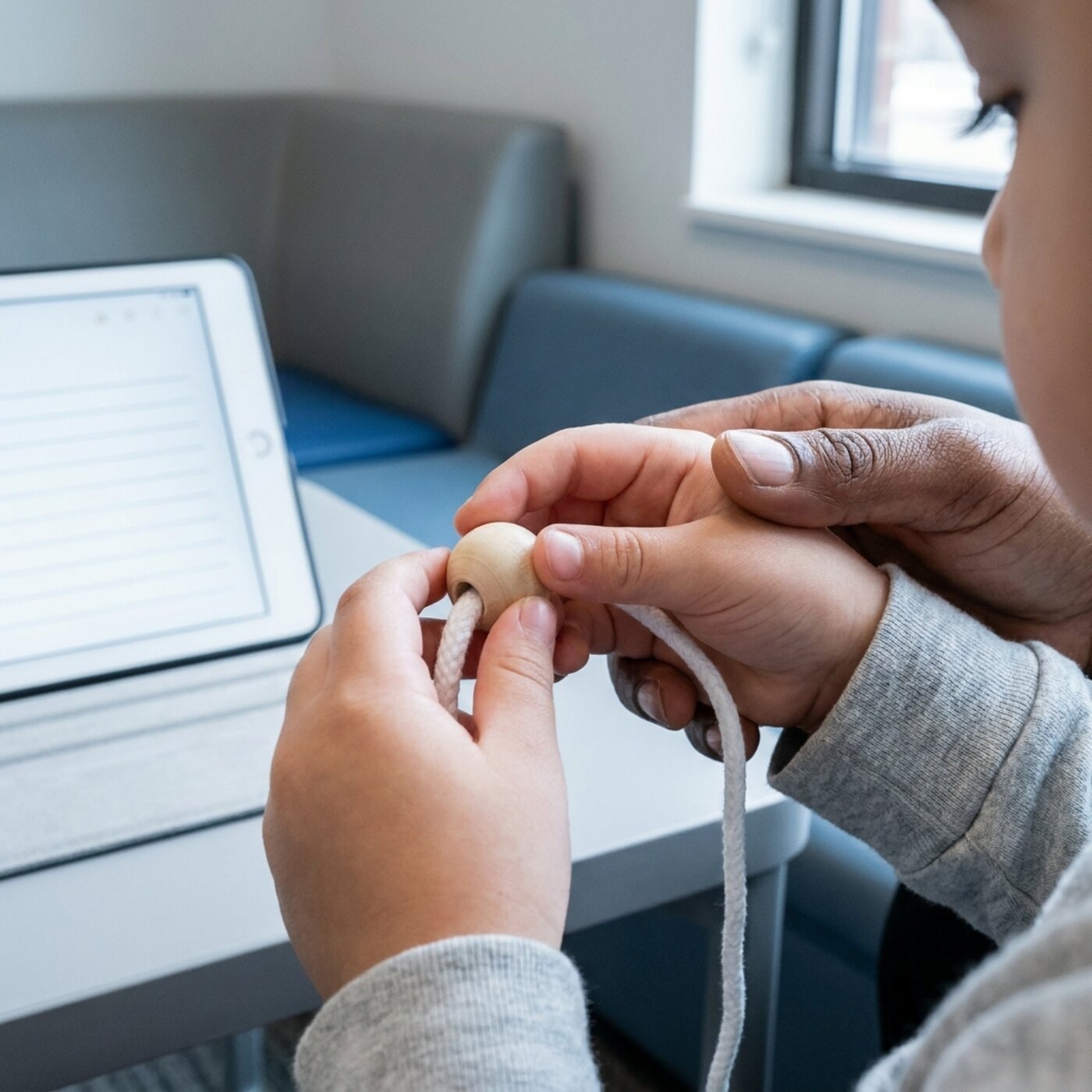
School occupational therapy helps a child take part in class: the fine-motor control to hold a pencil, the sensory regulation to sit through a lesson, and the independence to open a lunchbox and manage a school day.
It covers more than handwriting. Our licensed occupational therapists evaluate what's getting in a child's way and work on the goals in their plan.
Three areas school OT covers
In a school, a child's “occupation” is being a student: participating, producing work, and getting through the day independently. OT covers three broad areas, and an evaluation decides which a given child needs.
- Fine-motor & visual-motor
- Handwriting, cutting, buttoning, and the hand strength and eye-hand coordination behind them, plus keyboarding and tool use when writing isn't the right route.
- Sensory processing & self-regulation
- Helping a child who is overwhelmed by noise, movement, or touch (or who seeks constant input) organize their senses enough to stay calm, focused, and available to learn.
- Daily-living & classroom independence
- The self-care and organizational skills a school day demands: managing clothing and a lunchbox, following routines, and keeping materials in order.
What an OT evaluation looks like
The occupational therapist starts by watching how a child moves, handles tools, and copes with the sensory demands of the classroom.
Pick any part of the sentence to see the detail.
The OT gathers concerns from family and teachers and often uses a sensory profile to understand how the child responds to everyday input.
Validated tools measure fine-motor and visual-motor skills, the kind that quantify where a child stands against age expectations for handwriting, coordination, and motor planning.
The OT watches the child in action (gripping a pencil, sitting for a task, moving through transitions) because scores alone don't show how skills hold up during the school day.
Findings become measurable goals plus practical accommodations, and a recommended session frequency for the plan.
- Measurable goals, written from the findings
- Accommodations: practical changes for the classroom
- A recommended session frequency for the plan
Strategies teachers and families can use every day.
School OT is not limited to the therapy room. The occupational therapist turns goals into things a teacher can use every day: a pencil grip, a slant board, a movement break, a “sensory diet” of regulating activities, or a seating change that helps a child attend. We coordinate directly with the classroom team and coach families on simple home strategies, so the skills carry over into lessons.
See the full education catalog
OT by age group
The goals move from earliest motor and sensory foundations toward the fine-motor and organizational demands of a full school day.
- Early Intervention (birth–3)
- On the IFSP under NYS Early Intervention, usually at home: reaching, grasping, early self-feeding, tolerating textures and movement, and the play skills that build coordination, with caregiver coaching throughout.
- Preschool / CPSE (3–5)
- Through the Committee on Preschool Special Education: pre-writing and scissor skills, self-care like dressing, and the sensory regulation needed to join circle time and group activities.
- School-age (5–21)
- On the IEP or IESP: legible handwriting or keyboarding, organization and materials management, self-regulation strategies, and the independence to navigate a full school day.
How we match an OT to the mandate
Once the OT mandate or RSA/P3 authorization is confirmed, matching moves quickly, and we treat an approved-but-unfilled service with urgency.
Pick any part of the sentence to see the detail.
We confirm frequency, group size, and setting on the IEP/IESP, or take the details from an RSA/P3 authorization.
- Occupational therapy
- 2 times a week, 30 minutes
- Individual
- In school
An example of the line we confirm. The real values come from your child's own plan or authorization.
We match a licensed occupational therapist to the child's age, goals, and sensory or motor profile, and to the setting where sessions take place.
We build the schedule, share classroom strategies with the team, and keep progress data audit-ready for the annual review.
What parents ask about school OT
Isn't occupational therapy just about handwriting?
Handwriting is the most visible piece, but it's only one of three areas. School OT also addresses sensory processing and self-regulation (staying calm and focused amid classroom input) and daily-living independence (managing clothing, materials, and routines). Many children are referred for handwriting and turn out to need support with attention, regulation, or motor planning underneath it.
What does an occupational therapist actually do in a school?
A school OT helps a child do the “work” of being a student: participating, producing, and functioning independently. That can mean building the hand skills for writing, giving a dysregulated child strategies to stay available to learn, adapting a task or the environment, and coaching teachers on accommodations that carry through the whole day.
What is sensory processing, and how does OT help?
Sensory processing is how the brain takes in and organizes input: sound, movement, touch, body awareness. A child who is overwhelmed by input, or who seeks it constantly, can struggle to sit, attend, or cope. An OT evaluates the pattern and builds regulating strategies (movement breaks, seating, a “sensory diet”) so the child can settle enough to learn.
Will the OT pull my child out of class or work inside the classroom?
Both are options, and the goal decides. Some skills are best built one-on-one in a quiet space (pull-out); others, like using a strategy during a lesson or coaching the teacher, work better inside the classroom (push-in). We match the delivery model to the mandate and the child.
Does my child need a medical diagnosis to get school OT?
No. School-based OT is an educational service driven by the IEP or IESP, not a medical diagnosis. Eligibility comes from the evaluation and the school team's determination. (Clinic-based OT billed to insurance is a separate path that does involve medical necessity; we can explain both.)
How is progress measured?
Against the measurable goals in the child's plan. The OT documents each session, tracks progress on skills like handwriting legibility, regulation, or independence, and contributes to the progress reporting schools rely on, so the record is in order at the annual review.
How soon can OT start?
Once the mandate and paperwork (or the RSA/P3) are confirmed, we match from our provider network. Timelines vary by borough and caseload, but our coordination team treats an unserved mandate with urgency and responds to every inquiry within 24 hours.
See physical therapy, Early Intervention, or call (718) 540-8268.
If you have an OT voucher and are not sure what comes next
- I got an RSA for OT, but the offices that take it are far from us.
- An RSA does not have to mean an office visit. NYC Public Schools says the service may be given at your child's school, at your home, or at the provider's office, and the RSA packet has a form for travel costs if you do go to an office. Tell us which setting works and we match to it.
- I found an occupational therapist. Why can't she just start?
- You and the provider first fill out the RSA-2 form in your packet. NYC Public Schools then checks the provider's license and security clearance and sends an approval, and sessions cannot begin before that. Have the packet with you when you call and we will go through it together.
- Do I have to pay first and wait to be paid back?
- No, according to NYC Public Schools: an RSA lets you get the service at no cost to you, and providers bill the city directly and may not ask parents for payment. If sessions happen at home or in an office, you sign the invoice only for dates when sessions took place. We bill the DOE, not families.
- The OT page of the IEP or IESP
- Your full RSA packet, forms included
- School name and borough
- Where sessions could happen: school, home or office
- Sessions per week and length on the plan
You can call without all of these. We will work out the rest with you.
More therapies



Request an OT provider
Tell us the school or the setting and what the plan calls for. Our coordination team treats unserved mandates with urgency and responds within 24 hours, typically within 4–6 hours.