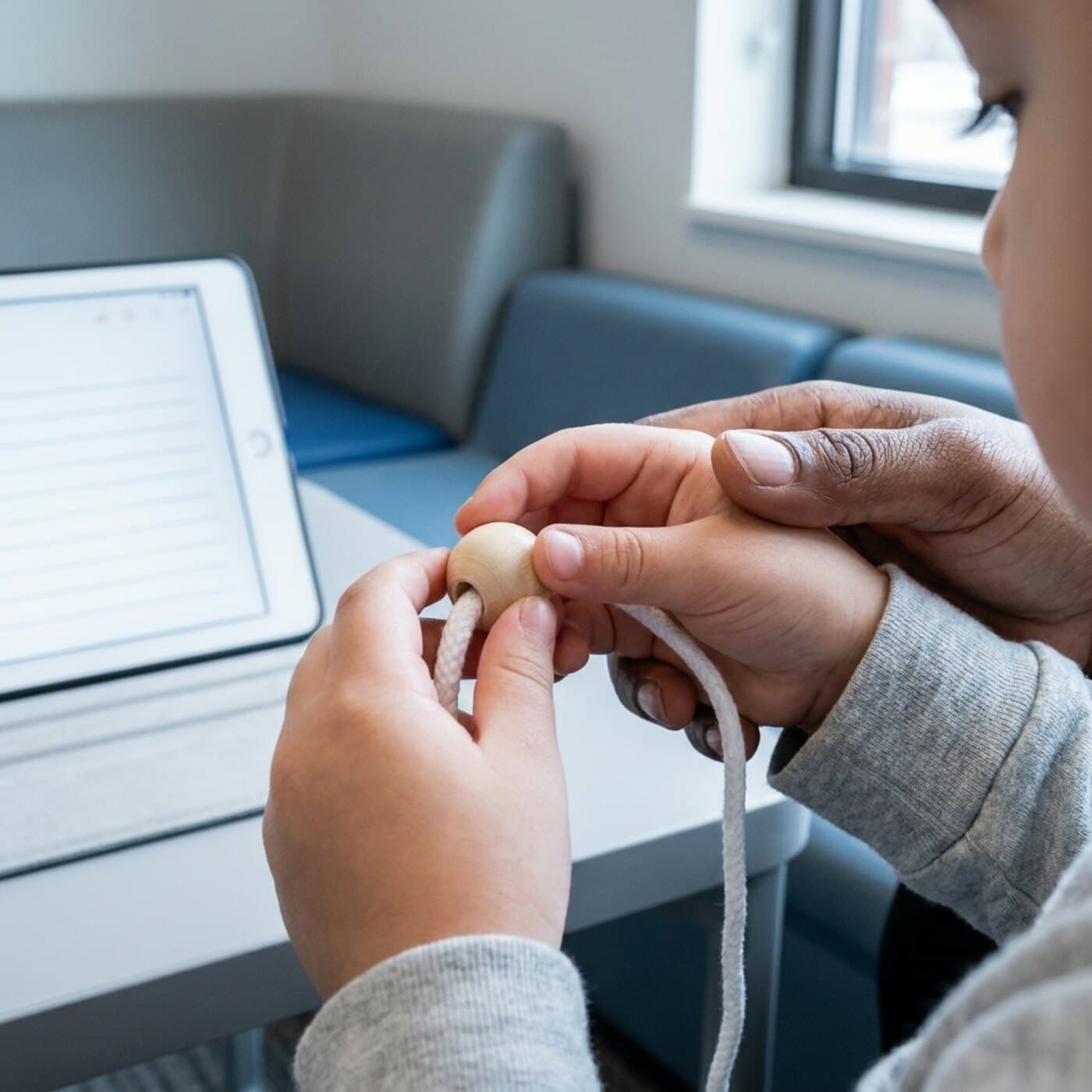
Child Development Evaluation
A documented assessment of how your child is developing.

Who evaluates your child
An evaluation is a set of assessments, each run by a specific licensed discipline. Which ones a child needs depends on the concern; a comprehensive evaluation often includes several.
Psychologist: psychological evaluation
Assesses cognitive and developmental functioning, learning profile, and behavior, often using standardized testing alongside observation.
Speech-language pathologist: speech-language evaluation
Assesses how a child understands and uses language, articulation, fluency, and early communication or feeding concerns.
Occupational therapist: OT evaluation
Assesses fine-motor skills, sensory processing, and the daily-living tasks a young child is expected to manage.
Physical therapist: PT evaluation
Assesses gross-motor development: sitting, crawling, walking, balance, and coordination against age expectations.
Social worker: social history
Gathers family background, routines, and context through a structured interview, to inform the test results.
Special educator: educational evaluation
For preschool and school-age children, assesses academic readiness or performance and how a child accesses instruction.
When a medical work-up is warranted
Some concerns call for a physician’s input alongside the educational and clinical evaluation: for example, a developmental pediatrician ruling out or confirming a medical condition. When that’s relevant, we help a family understand the referral. That determination is not ours to make.
The five areas an evaluation covers
A comprehensive developmental evaluation looks at every area of development, not one skill in isolation, so the results are complete enough to build a plan on.
Motor skills
Gross- and fine-motor development: how a child moves, reaches, grasps, and coordinates.
Thinking & problem-solving
Cognition and early learning: attention, memory, and how a child works through a task.
Speech & language
Communication: understanding language and expressing wants, needs, and ideas.
Social interaction
How a child relates, plays, and connects with caregivers and other children.
Emotional well-being
Regulation and emotional health, which support every other area of development.
We arrange the evaluation and help the family through the results
Knowledge Road’s role is coordination: we source and match a qualified, licensed evaluator (or evaluation team, for a fuller workup) to your child’s age and needs, arrange the session in a setting where your child is comfortable, and make sure the results are explained in plain language. The eligibility determination is made by the evaluation and the program’s team. We keep the process on schedule and make sure each step is completed.
Understand Early Intervention Coordinated by Knowledge Road
How the NYC evaluation process works, from referral to plan
Pick any part of the sentence to see the detail.
A parent, pediatrician, school, or another provider can make the referral. For children birth to 3, that's a call to NYC's Early Intervention Program; for preschool and school-age children, it typically starts with the school or the district's Committee on Preschool/Special Education (CPSE/CSE).
Evaluations require a parent's informed consent before they begin. Once consent is signed, we help schedule the session at a time and setting where the child is comfortable: home, school, or an agreed location.
- A parent's informed, signed consent comes first
- Then we help schedule the session
- At home, at school, or at an agreed location
A qualified evaluator (or a small team, for a fuller workup) combines play-based observation, standardized assessments, and the family's own input across the domains that matter for this child.
Results go to the program's team (the EI service coordinator and family for an IFSP, or the CPSE/CSE team for a school-age plan), who review findings, determine eligibility, and, when eligible, build an IFSP or IEP with measurable goals and service referrals.
- Birth to 3: the EI service coordinator and the family, toward an IFSP
- Preschool and school age: the CPSE or CSE team, toward an IEP
- They decide eligibility, then goals and service referrals
Exact timelines are set by state and city regulation and vary by program and age: for Early Intervention (birth–3), evaluation and the first plan are governed by a legal timeline; for CPSE and CSE, your service coordinator will tell you the specific dates that apply to your case.
What to expect, from the first call to the results conversation
Here’s what we make sure happens on our side of the evaluation.
- Results explained in plain language in a family feedback conversation
- After the evaluation, someone goes over your child's strengths and needs with you and answers your questions.
- Interpretation and translated materials arranged when a family needs them
- Tell us the language your family is most comfortable in, and we plan for it around both the evaluation and the results conversation.
- A setting chosen for where the child is most comfortable and observable
- Evaluations can take place at home, at school, or at another agreed location, and we help schedule a time that works for your child.
- A realistic sense of timing communicated up front, and updates along the way
- Timelines are set by state and city rules and vary by program and age, so we tell you which ones apply to your case.
- If a child isn't found eligible, guidance on what to watch and what to try next
- The eligibility decision belongs to the program's team, not to us, and either way we talk through the results with you and what you might do next.
What families ask
What does a developmental evaluation cover?
A comprehensive look at a child's development across domains (motor skills, thinking and problem-solving, speech and language, social interaction, and emotional well-being) using play-based observation, standardized assessments, and family input.
Who conducts the evaluation?
We coordinate a qualified, licensed evaluator matched to the child's age and needs, and cleared to work with children. Knowledge Road's role is sourcing and coordinating the right evaluator and keeping the process on track, not making the eligibility determination.
What does the evaluation cost?
There is no cost to eligible families when the evaluation is authorized through DOE-approved or NYS Department of Health programs. Insurance is also accepted where applicable. We help families understand which path applies before anything begins.
How long does it take, and where does it happen?
Evaluations typically run 2–3 hours and can be split into shorter visits when that's easier for the child. They take place in-home, in-school, or at an agreed setting, wherever the child is most comfortable and observable.
What do families get at the end?
A clear, documented picture of the child's strengths and needs, explained in a family feedback session. When the child is eligible, that includes an Individualized Family Service Plan (IFSP) with measurable goals and referrals for any recommended services: speech, OT, PT, ABA, and others.
How do we get started?
Tell us the child's age and your concerns. Our coordination team responds within 24 hours, typically within 4–6 hours, and arranges the evaluation from there.
An evaluation often leads into Early Intervention or Special Instruction / SEIT. Questions? Call (718) 540-8268.
If an evaluation is the next step for your child
- What if my child will not cooperate, or is just having an off day?
- Evaluators who work with babies and toddlers expect that. The evaluation uses play-based observation and your own input along with testing, and it can be split into shorter visits in a setting where your child is comfortable. What you tell the evaluator counts.
- I am afraid an evaluation will put a label on my child.
- An Early Intervention evaluation looks at how your child is doing right now, and its job is to decide whether your child is eligible for services. It happens only with your written consent. The city describes the program as voluntary and confidential, and you may see and get copies of your child's records.
- What happens if they say my child does not qualify?
- There are still options if your child does not qualify. In New York City, a child under three who is not eligible can be enrolled in the Health Department's Developmental Monitoring, which follows milestones over time and can refer back for an evaluation. Call us and we will talk through the options that are open to you.
- Your child's date of birth
- A few examples of what you are seeing day to day
- Your pediatrician's name and any notes from checkups
- Any earlier evaluation or hearing test results
- The language your family is most comfortable in
You can call without all of these. We will work out the rest with you.
More in Education Services



Start with an evaluation.
Tell us your child's age and your concerns. Our coordination team responds within 24 hours, typically within 4–6 hours, and arranges the evaluation from there.